Opticien, optométriste et audioprothésiste à Vevey depuis 1928.
Opticien, optométriste et audioprothésiste à Vevey depuis 1928.
Myopia (nearsightedness) is a vision disorder primarily characterized by difficulty seeing clearly at a distance. In children, it typically emerges during the school years and can progress gradually until late adolescence. It is often linked to excessive growth of the eye: the eye becomes longer than normal, causing the image to be focused in front of the retina.
Today, myopia represents a significant visual health issue. According to an international study published in the scientific journal *Ophthalmology*, there were an estimated 2.2 billion nearsighted people in 2020, a figure projected to reach approximately 4.8 billion by 2050. This would account for nearly one in every two people worldwide. Even more concerning is that nearly 10% of the global population could have high myopia by 2050.
These projections highlight the importance of early detection and regular monitoring in children. The earlier myopia develops, the more time it has to progress. It is therefore essential not to view frequent changes in prescription merely as a natural evolution of vision, but also to pay attention to the growth of the eye.
Myopia results from a combination of genetic and environmental factors. For instance, a child whose parents are nearsighted faces a higher risk of developing myopia themselves. However, heredity alone does not account for the current rise in the number of people affected.
Our lifestyles have changed significantly. Children spend more time indoors, dedicating many hours to close-range activities—such as homework, reading, and using screens. A lack of exposure to natural light and insufficient time spent outdoors are among the factors associated with the development of myopia.
Encourage children to spend about two hours a day outdoors whenever possible.
Take regular breaks during near-vision activities.
Avoid reading or using screens at too close a range.
Ensure appropriate lighting for homework and reading.
Schedule regular eye exams.
While these habits do not replace myopia-control treatment when such treatment is indicated, they do contribute to better prevention.
Unlike conventional lenses that only correct vision, myopia control lenses are designed to also act on the progression of the visual defect. Their aim is to slow the excessive elongation of the eye as it grows.
Several manufacturers now offer specific technologies:
HOYA-Miyosmart
(D.I.M.S. technology)
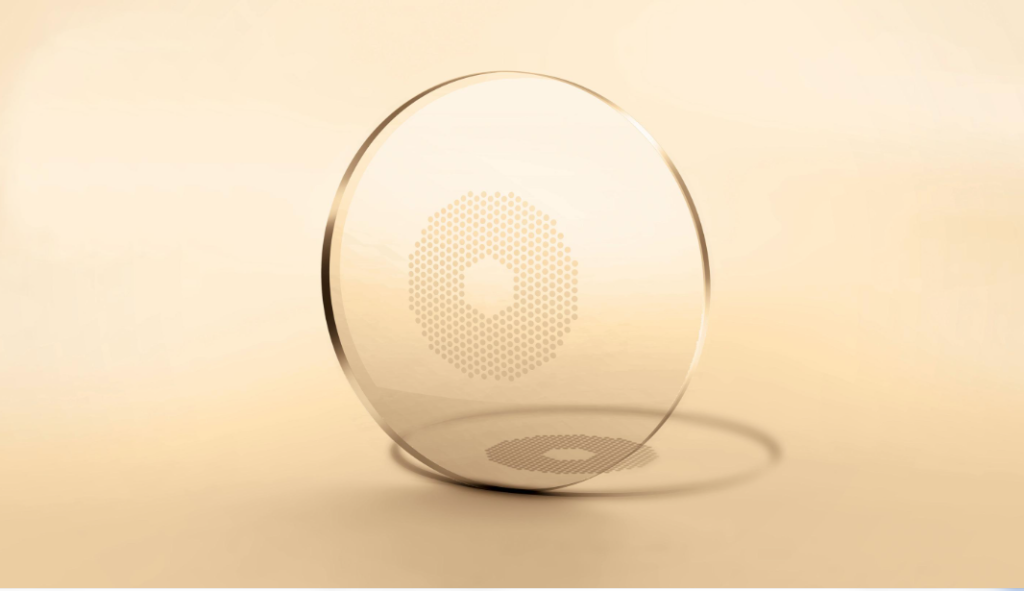
D.I.M.S. technology (Defocus Incorporated Multiple Segments) uses a central zone that provides clear vision and a multitude of small peripheral segments that create myopic defocus. This design corrects vision while simultaneously sending an optical signal intended to slow excessive eye growth. Published clinical studies show an average reduction in myopia progression of around 60% compared with conventional single-vision lenses, under the conditions of the studies carried out.
Essilor-Stellest (H.A.L.T. technology)
H.A.L.T. technology (Highly Aspherical Lenslet Target) is based on a set of small aspherical optical elements distributed around the central correction zone. These microstructures create a volume of defocus intended to slow the elongation of the eye. Essilor’s clinical studies have shown encouraging results, including an average 67% reduction in myopia progression over two years in an international study, compared with conventional lenses. US results published in 2026 also confirm the value of this technology.
Optiswiss-Smyle/Ikyum-Lumi kids
The Swiss manufacturer Optiswiss offers SMYLE, a solution based on FreeForm technology developed with Indizen Optical Technologies and built on the principles of peripheral defocus. The lens features a clear central vision zone and peripheral functional zones that create defocus tailored to the shape of the retina. Its design also incorporates accommodative support intended to enhance visual comfort. A European study published in 2024 showed a 39% reduction in myopia progression after 12 months compared to standard single-vision lenses.
These three solutions pursue the same goal but use different lens designs. The percentages quoted come from separate studies and should not be directly compared as a ranking. The choice of lens depends on the child’s age, the progression of their myopia, their prescription, and their visual needs.
Monitoring myopia goes beyond simply measuring diopters. A particularly important factor is the axial length of the eye—the distance from the front to the back of the eyeball.
This measurement allows for direct monitoring of the eye’s growth and provides a better understanding of how myopia is progressing. A prescription that remains relatively stable does not necessarily mean that the growth of the eye is fully under control.
At Lunetterie du Léman, we are equipped to measure the axial length of your child’s eyes. This additional examination provides a precise value, serving as a reference point for future check-ups.
Cost of the measurement: CHF 25.–
We have made this examination accessible to families: should you subsequently decide to have your child’s glasses made with us, we will fully reimburse the CHF 25.– fee for this measurement.
Our goal is to encourage regular follow-ups and provide parents with concrete information on the development of their child’s visual health.


As of July 1, 2024, progressive myopia control is included in the List of Means and Appliances (LiMA) of Swiss health insurance. This development represents a significant step forward in the care of myopia in young people.
LiMA position 25.02.04.00.1 provides for a contribution of up to CHF 850.– per year, until the age of 21, for certain progressive myopia treatments.
Please note: this reimbursement is subject to specific medical conditions. It particularly concerns children with a progression of at least 0.50 diopters per year, associated with an axial length greater than average according to growth curves, and presenting a risk of progression toward high myopia, or already suffering from progressive high myopia.
Coverage specifically requires:
A prescription issued by an ophthalmologist on the required form.
Indications regarding the axial length of the eye.
Proof of myopia progression.
A treatment recognized for its effectiveness in myopia control.
There is also LiMA position 25.01.01.00.1, which concerns glasses and contact lenses for children up to the age of 18, with a maximum contribution of CHF 180.67 per year, subject to applicable prescription conditions. This position cannot be combined with the one specifically provided for progressive myopia control.
We can provide information on these regulations and help you understand the steps to take with your ophthalmologist and health insurance.
A child’s glasses must be tailored to their facial structure, their activities, and their daily life. They should provide high-quality vision, a comfortable fit, and the durability required for what can sometimes be a very active lifestyle.
At Lunetterie du Léman, we pay special attention to the selection of frames and materials. We provide guidance on the eyewear best suited to your child’s age and activities, with a focus on safety, comfort, and durability.
Because a pair of glasses can be put to the test at school, during leisure time, or while playing sports, we also offer a breakage warranty for children’s eyewear, subject to the coverage terms set by our store.
This warranty allows parents to approach the purchase of glasses with greater peace of mind, knowing they will have support should an accident occur. We would be happy to explain the specific terms and conditions of this protection during your visit.